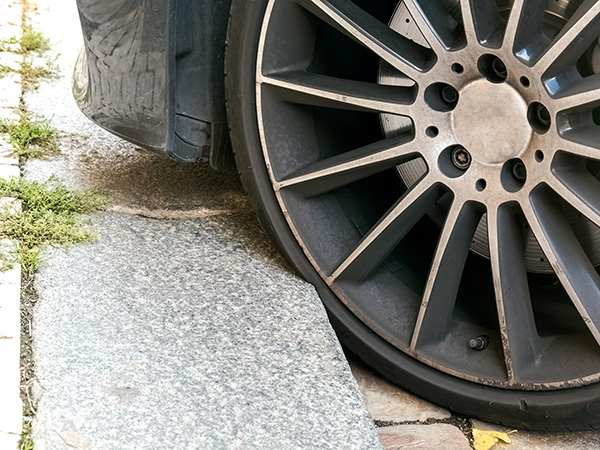
A tire bubble can show up after an impact you barely remember. You hit a pothole or clip a curb, then the car drives fine. Later you notice a bulge on the sidewall that looks wrong.
That bulge is a warning sign you should take seriously.
What A Tire Bubble Means
A bubble forms when the internal cords in the sidewall get damaged. The outer rubber can stay intact, but the structure underneath is weakened, so air pressure pushes outward. That is why the bump looks smooth instead of torn.
Plugs and patches are not the answer here. They work in the tread area when a puncture is small and contained. Sidewall damage is structural, so replacement is the safe fix.
Why Sidewall Damage Is A Big Deal
Sidewalls flex constantly in turns and over bumps. When the cords are compromised, that flexing can make the bubble grow or fail with little notice. Heat, speed, and heavy loads all increase the stress.
Many failures happen at higher speeds because the tire is working harder and running hotter. A tire can seem fine for short errands, then give up on the highway. Reducing risk usually means limiting driving and replacing the tire quickly.
Tire Bubble Vs Sidewall Scuff
A curb scuff can look ugly, but still be harmless if it is only surface rubber. A bubble is different because you can feel it protruding and it has a rounded shape. If you see a bulge, assume the cords underneath have been affected.
Check the tire in good light and from a few angles. If the bulge seems larger after driving, treat that as a bad sign. Also look for a scrape mark or pinch cut nearby.
Is It Safe To Drive With A Tire Bubble
In most cases, it is not something to keep driving on for days. If you must move the vehicle, keep it slow, keep it short, and avoid freeway speeds. Skip extra cargo and avoid sharp turns that load the damaged sidewall.
A simple decision rule helps. A large bubble, a bubble that is growing, or any new vibration means do not drive it except to get help. A very short trip to a nearby shop may be possible when the bubble is small, but it still needs attention right away.
What To Do After A Pothole Or Curb Hit
Start by checking tire pressure and looking for other visible damage. Do not overinflate the tire, trying to flatten the bubble, since that adds stress. If the bubble is on a front tire, be extra cautious because steering control depends on those tires.
Here is how to keep yourself and the others safe:
- Keep speeds low and avoid the freeway until the tire is replaced.
- Check the wheel for bends or cracks.
- Pay attention to any pull, shake, or new vibration while rolling.
- Look for a second bubble, especially on the same side of the vehicle.
- If you have a full-size spare, use it instead of pushing your luck.
The point is avoiding a roadside failure.
Check The Wheel And Alignment Too
A bubble tells you the impact was strong enough to hurt the tire, and the wheel can take a hit too. A bent wheel can create a steady vibration that will not go away with balancing. A hard hit can also knock alignment out just enough to start eating a new tire.
This is where regular maintenance quietly pays off. When tire wear has been even, a new pull or odd wear pattern stands out fast. If the car already had uneven wear, the impact can make it harder to sort out.
After Tire Replacement: What To Watch For
After the tire is replaced, pay attention at 40 to 70 mph. A steering shake can point to wheel damage or a tire that needs balancing. A drift or crooked steering wheel can point to an alignment change from the impact.
Also think about tire matching. If the other tire on the axle is much more worn, wet traction can feel inconsistent. Keeping tread depth and tire type reasonably matched helps the vehicle stay predictable.
Get Tire Bubble Inspection in Kelowna, BC with A Plus Automotive
We will check the damaged tire and wheel, explain the safest replacement options, and help you avoid uneven wear on the new tire. If the impact also affected alignment or balance, we’ll point it out so the vehicle feels stable again.
Call or schedule service with A Plus Automotive today. We’re here to help you get back on the road with confidence.