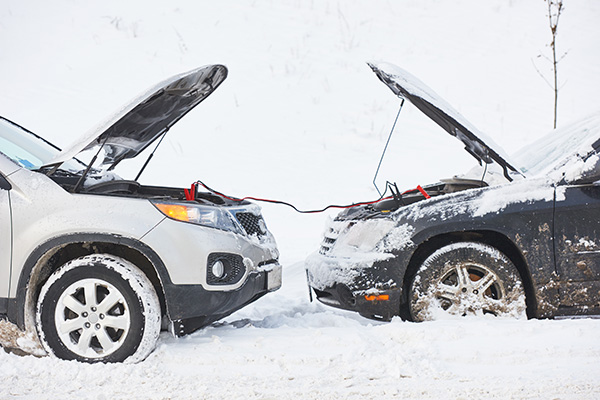
Cold weather has a knack for exposing a battery that was already living on borrowed time. One day the car starts normally, the next morning it cranks slowly or barely clicks. You boost it, it runs, and you think you’re back to normal. Then the same thing happens again.
That pattern usually means the battery is weak, the charging system is not keeping up, or the car is losing power while it sits. Winter just makes the gap impossible to ignore.
Why Batteries Struggle When Temperatures Drop
A battery’s chemical reaction slows down in the cold. That means it produces less power at the exact time the engine needs more effort to crank. Cold oil is thicker, internal friction is higher, and the starter has to work harder. Add headlights, rear defrost, heater fan, and seat heaters, and you’re asking a lot from a battery that may already be tired.
A battery can test okay in mild weather and still fail in winter because there’s no reserve left. That’s why cold weather failures feel sudden, even though the battery was aging quietly for months.
Why Boosting It Doesn’t Solve The Root Issue
A boost gets the engine spinning. It does not repair the battery’s ability to hold and deliver strong power. If the battery has internal wear, sulfation buildup, or low capacity, it may start once with help and still be unable to handle the next cold start.
Short trips add to the problem. Many drivers assume a quick drive recharges everything, but winter electrical loads can outpace what the alternator puts back during a short commute. If the battery stays partially charged day after day, it becomes easier for cold temperatures to push it over the edge.
Early Warning Signs Most Drivers Notice First
A lot of winter battery issues give you small clues before the first dead morning, but they’re easy to miss.
- Slower cranking first thing in the morning
- Headlights that dim more than usual while starting
- Electronics that reset, like clock or radio presets
- A battery warning light that flickers or shows up briefly
- Starts that feel fine after a longer drive, then weak again after sitting
If you notice a pattern like starts are worse after the car sits overnight, that’s useful information. It helps narrow whether the issue is battery reserve, charging, or draw while parked.
The Most Common Winter Causes Behind Repeat Dead Batteries
The battery itself is the big one, especially if it is older or has been deeply discharged before. Deep discharges are hard on batteries, and once that happens a few times, capacity can drop quickly.
Charging issues are next. A weak alternator can look fine until the car is loaded up with winter accessories. Corroded battery terminals and poor ground connections also cause trouble because they add resistance. The battery may be healthy, but the power cannot move efficiently.
Then there is a power draw while the car sits. Modern vehicles always have some draw, but a module that stays awake, a stuck relay, or an accessory wired to constant power can pull enough to drain a battery by morning, especially if the battery is already weak.
Owner Habits That Make Winter Starting Harder
A common habit is lots of short trips with heavy electrical use. That’s normal life, but it’s rough on the battery in winter. Idling with the heater and defroster running, sitting in the driveway while the car warms up, and leaving accessories plugged in can all keep the battery from recovering.
Another mistake is focusing only on voltage. A battery can show decent voltage and still fail a load test. It can look okay on a screen and still be unable to deliver strong cranking power. That’s why proper testing matters more than a quick glance.
What We Check When You Want Real Answers About A Weak Battery
If a battery keeps letting you down, the fastest way to solve it is to test the whole starting and charging picture instead of guessing. We start by load testing the battery to see how it performs under real demand, not just what it reads sitting still. Then we verify alternator output with the vehicle under electrical load, and we check terminals and grounds for voltage drop, because a weak connection can mimic a weak battery.
If the battery and charging system check out but the battery still loses power after the car sits, we measure the key-off draw only after the vehicle has fully gone to sleep. From there, we isolate the circuit that’s staying active and track down what’s keeping it awake.
This kind of step-by-step testing saves money because it avoids the parts-swapping cycle, and it helps prevent a new battery from getting pulled down by the same hidden issue.
Get Battery And Starting Service in Kelowna, BC with A Plus Automotive
If your battery keeps dying in cold weather, we can test cranking strength, verify alternator output, check cables and grounds, and confirm whether the car is drawing power while it sits. We’ll explain what we found and lay out the repair options clearly. Get battery and starting service in Kelowna, BC with A Plus Automotive, and we’ll help you start reliably even when temperatures drop.